7/29/2026 11:43:19 AM by
PedersenDraw
(Edited: 7/31/2026 8:39:38 AM)
Views: 58
Creating compelling, hyper-realistic AI art goes far beyond entering a simple phrase into a generator. It requires a structured creative workflow that blends artistic vision with technical precision. Here is a breakdown of how a single concept evolves into a finished masterpiece.
Step 1: The Concept
Every great piece begins with a clear visual idea. This stage involves defining the core narrative, mood, and aesthetic of the image—whether it is a gritty cyberpunk alleyway or a warm, lovely fairytale setting. A strong concept serves as the roadmap for every decision made later in the process.
💡Idea: a sexy version of Rapunzel! 😆
Step 2: Character Creation
Characters bring the narrative to life. At this stage, the focus shifts to establishing consistent visual traits: facial features, expression, posture, outfit, and signature elements. Using techniques like custom model training (such as LoRAs) or precise character descriptions ensures that the figure remains recognizable across different poses and scenes.

Rapunzel - character concept
Prompt used in this case:
Full-body image of a sexy version of Rapunzel, barefoot and wearing a very tight, skimpy princess outfit. She has very long braided blonde hair, strong eyebrows, light brown eyes, and a beautiful face with light makeup. She has a sexy, curvy body, but without exaggerated proportions. Neutral background.
Step 3: Scene Composition
With the character defined, the next step is building the environment. This stage involves arranging the spatial dynamics, camera angles, lighting, and background details. By combining prompt engineering with control techniques (like ControlNet or image-to-image workflows), the character is seamlessly integrated into a cohesive, believable world.

Chosen pose
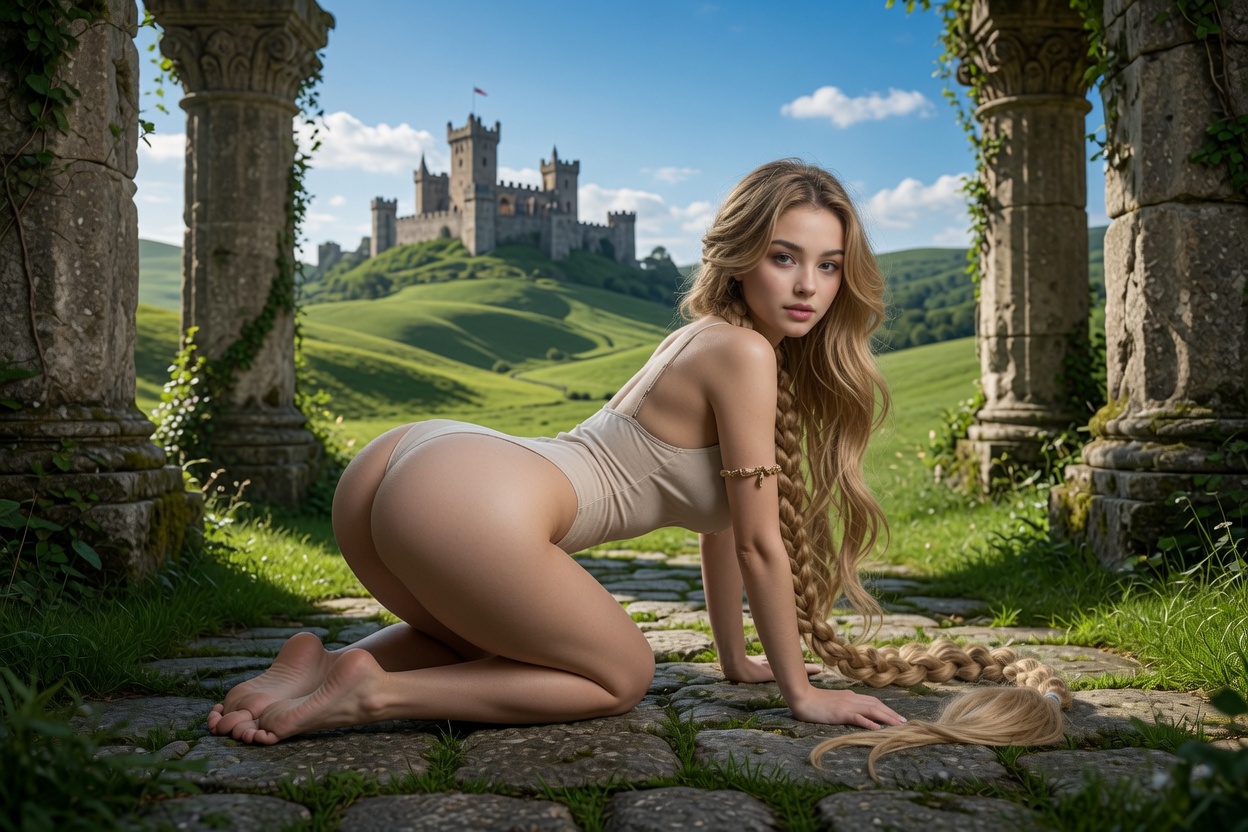
Chosen scenario
These two images were obtained by editing the first image in sequence (prompts omitted).
Step 4: Refinement and Post-Processing
The final transformation happens in post-processing. Raw AI outputs are upscaled to high resolution, enhancing fine details like skin texture, ground relief, and micro-expressions. Minor artifacts are fixed, and color grading is applied to unify the lighting and tones, giving the image a polished, professional finish.

After upscaling and post-processing
This step-by-step approach bridges the gap between imagination and execution, turning raw AI potential into artwork rich in detail and story.
Can you imagine the effort, time, and resources that go into a sequence of images that tells a story while maintaining consistency in characters and setting?
If you’d like to see more work like this, chek my gallery here. Thaks for viewing!